A sore, red bump on your eyelid that seems to appear out of nowhere can be both alarming and uncomfortable. Styes are one of the most common eye concerns that bring patients into the clinic, yet many people are unsure how long they should expect to wait for relief or when it is time to seek professional care. Most styes resolve on their own within one to two weeks. However, many factors affect how quickly they heal.
Keep reading to learn more about styes and how long they last!
What Is a Stye?
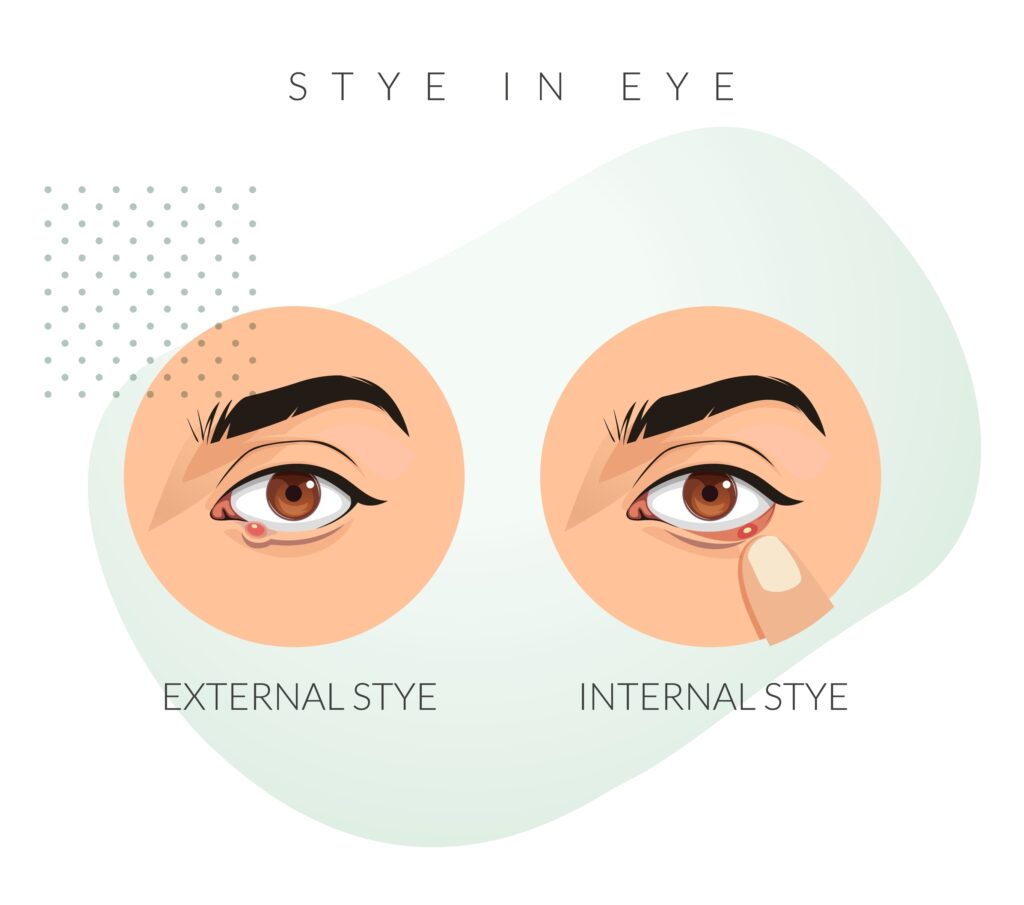
A stye, medically called a hordeolum, is a small bacterial infection that develops in the oil glands or hair follicles along your eyelid.
When one of these tiny glands becomes clogged with dead skin cells, debris, or old makeup residue, bacteria (most often Staphylococcus aureus, the same bacteria commonly found on skin) can multiply inside it. The result is a red, tender bump that is almost like a pimple, and often forms right at the eyelid margin or just inside the eyelid.
There are two main types of styes: external and internal. An external stye forms on the outer edge of the eyelid, typically near an eyelash root. An internal stye develops deeper, inside the eyelid, where the meibomian glands (oil-producing glands) are located. Internal styes tend to be more painful and can take slightly longer to drain. Both types are treated in much the same way.
How Long Do Styes Last?
Most styes follow a predictable timeline. In the first day or two, you will notice tenderness and a small red swelling forming along the eyelid. Over the next several days, the bump becomes more defined, and a yellowish tip may appear as pus collects. At this stage, styes can feel particularly tight and uncomfortable when blinking.
For the majority of people, a stye drains naturally and begins to resolve between days seven and 10. With good at-home care, most styes are fully healed within one to two weeks. Some external styes begin to drain within just a few days. Internal styes, by contrast, may not drain as easily on their own and can linger toward the longer end of that window.
What Affects How Quickly a Stye Heals?
Several factors influence whether your stye clears up closer to the one-week mark or stretches toward two weeks.
Warm Compress Use
Applying a clean, warm compress to your closed eyelid for 10 to 15 minutes, three to four times each day, is the most effective thing you can do at home. The warmth helps loosen the blocked gland and encourages the stye to drain. Most patients who apply warm compresses consistently see improvement sooner than those who wait without treatment.
Eyelid Hygiene
Gently cleaning your eyelid with mild soap and water helps remove bacteria and debris that could slow healing or spread the infection. Avoiding eye makeup and contact lenses while the stye is active is also important, as both can reintroduce bacteria and cause the gland to stay blocked longer.
Avoiding the Urge to Pop or Squeeze
Squeezing a stye may seem like the fastest path to relief, but it can push the infection deeper into the eyelid tissue or spread bacteria to neighboring glands. Letting the stye drain naturally, aided by warm compresses and gentle massage, is the safer approach.
Underlying Eyelid Conditions
People with blepharitis (chronic eyelid inflammation) or meibomian gland dysfunction tend to develop styes more frequently and may find that individual styes take longer to resolve. If you notice recurring styes, this pattern is worth discussing with an eye care provider.
When Should You See a Doctor About a Stye?
Most styes do not need medical treatment, but there are clear signs that professional care is appropriate.
Contact an eye doctor if any of the following occur:
- The stye has not started improving after one week of warm compresses
- The stye has not resolved fully after two weeks
- Pain, swelling, or redness is getting worse rather than better
- Redness begins spreading beyond the eyelid to the cheek or other parts of the face
- You develop a fever
- Your vision changes or becomes blurry
These signs can indicate that the infection has spread or that the stye is developing into a more persistent problem. Your eye doctor can prescribe antibiotic eye drops or ointment, perform a minor in-office drainage procedure, or in persistent cases, consider a steroid injection to reduce swelling.
Could It Be a Chalazion Instead?
If a stye does not drain completely, the blocked gland can harden over time into what is called a chalazion.
A chalazion is a firm, painless lump inside the eyelid that is not caused by an active infection. Unlike a stye, chalazia can persist for weeks to months and may require in-office treatment if they do not resolve on their own.
The distinction matters because treatment strategies differ. If you have a lump on your eyelid that is no longer red or tender but refuses to go away, scheduling a visit with an eye doctor will help clarify what is happening. Many chalazia respond well to continued warm compresses, but persistent or large ones may need a corticosteroid injection or minor drainage procedure.
Can You Prevent Styes from Forming?

Once you have had one stye, reducing your risk of future ones comes down to consistent eyelid hygiene. Wash your hands thoroughly before touching your eyes, remove all eye makeup before bed, and replace mascara every two to three months. If you wear contact lenses, follow proper cleaning and replacement schedules.
For those who experience frequent styes, omega-3 fatty acid supplementation has shown benefit in supporting meibomian gland health, according to data published in clinical reviews of meibomian gland dysfunction. Your eye doctor can help you build a longer-term lid hygiene routine tailored to your situation.
Find Relief at Blaine Eye Clinic
Styes are uncomfortable, but they are rarely serious when managed properly. With warm compresses, good eyelid hygiene, and a little patience, most styes resolve within one to two weeks. If yours is not improving, becoming more painful, or returning frequently, getting a professional evaluation will give you a clearer picture and faster path to relief.
Schedule an appointment at Blaine Eye Clinic in Blaine, MN, and let our team take a look. We are here to help you feel better and keep your eyes healthy!