
Most people only think about their tears when they cry or when their eyes water on a windy day. Yet a thin layer of fluid coats the surface of your eyes every moment they are open, quietly keeping your vision clear and your eyes comfortable.
Keep reading to learn what the tear film is, the job each part of it does, and what happens when it stops working the way it should.
What Is the Tear Film?
The tear film is the thin, moist coating that sits on the front surface of each eye. It covers the cornea, the clear dome at the front of your eye, and it refreshes every time you blink. This coating gives light a smooth surface to pass through, which directly affects how sharp your vision feels. It also protects the delicate tissue underneath from dust, bacteria, and irritation. When your tear film is healthy, you rarely notice it. When it is not, even simple tasks like reading or driving can become uncomfortable.
The Three Layers of the Tear Film
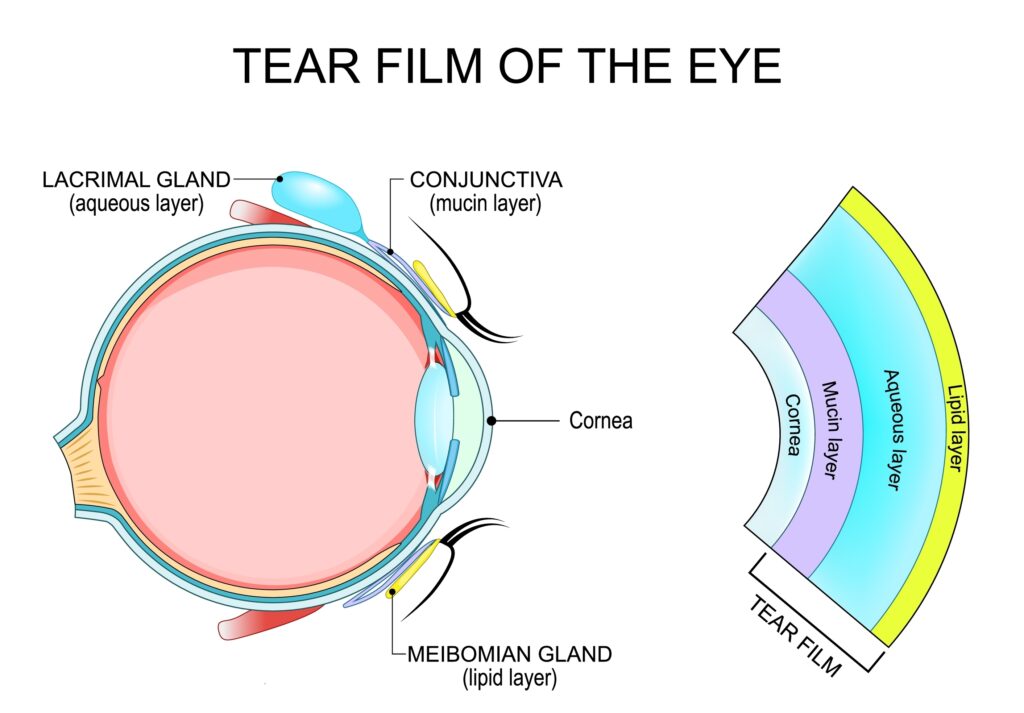
Your tear film is made of three distinct layers, and each one is produced by a different part of your eye. Together, they keep your eyes lubricated, nourished, and clear.
The Oily Outer Layer
The outermost layer is made of oil, also called lipid. Small glands along the edge of your eyelids, known as the meibomian glands, produce this oil. Its main job is to slow down evaporation so your tears do not dry out too quickly between blinks. When these glands become blocked or stop working well, tears evaporate faster than your eyes can replace them.
The Watery Middle Layer
The thickest layer sits in the middle and is mostly water. Your lacrimal glands, located above each eye, produce this watery portion. It lubricates the surface of your eye, rinses away dust and foreign particles, and carries nutrients and oxygen to the cornea. This is the layer most people picture when they think of tears.
The Mucus Inner Layer
The innermost layer is made of mucus, sometimes called mucin. It coats the surface of your eye and helps the watery layer spread evenly instead of beading up and rolling off. This layer also helps your tears stick to the eye, so the whole film stays in place where it belongs.
How the Tear Film Protects Your Eyes

Every time you blink, your eyelids sweep a fresh coat of tear film across your eyes. This simple motion does several important things at once and explains why your eyes feel refreshed after a blink.
A healthy tear film keeps your vision crisp by giving light an even surface to travel through. It washes away debris and irritants before they can scratch or infect the surface of your eye. It also delivers oxygen and nutrients to the cornea, which has no blood vessels of its own and relies on tears to stay healthy.
The tear film even helps fight infection. The watery layer contains proteins and antibodies that defend against bacteria. So while tears may seem like a minor detail, they are one of your eyes’ first lines of defense.
What Happens When the Tear Film Breaks Down
When any one of the three layers is out of balance, the whole tear film suffers. You might not produce enough tears, or the tears you do produce may be poor in quality and evaporate too fast. Either way, the surface of your eye is left exposed and irritated.
This breakdown is the root of dry eye syndrome. A weak oily layer lets tears evaporate quickly. A thin watery layer leaves the eye under-lubricated. A faulty mucus layer keeps tears from spreading evenly. Any of these problems can leave your eyes feeling dry, gritty, or strangely watery.
The symptoms can be confusing. Many people are surprised to learn that excessive tearing is often a sign of dry eyes, not the opposite. When your eyes sense dryness, they may flood the surface with reflex tears that lack the oil and mucus needed to stay put.
Common Signs of an Unhealthy Tear Film
A struggling tear film tends to announce itself through everyday discomfort. You may notice these symptoms come and go depending on your environment, screen time, or the season.
- Burning, stinging, or a gritty feeling, as if something is in your eye
- Redness, watering, or sensitivity to light
- Blurry vision that clears briefly when you blink
If symptoms like these stick around, consider having an eye doctor take a closer look. A thorough exam can reveal whether your tear film is the source of the problem, and dry eye can be detected during a comprehensive eye exam, often before it causes lasting irritation.
Keeping Your Tear Film Healthy

Some daily habits support a stable tear film. Staying hydrated, taking regular breaks from screens, and adding omega-3 fatty acids to your diet can all help. Still, these steps tend to manage the symptoms rather than the underlying cause.
When at-home care is not enough, professional treatment can target the real source of the problem. There are several effective ways to treat dry eye beyond over-the-counter drops, such as in-office therapies that restore oil gland function or treatments that calm inflammation. The right approach depends on which layer of your tear film needs help.
The first step is always an accurate diagnosis. During a comprehensive eye health exam, the team at Blaine Eye Clinic in Blaine, MN, can measure the quality and stability of your tears and pinpoint what is throwing your tear film off balance. From there, your doctor can build a plan suited to your eyes and your routine.
Healthy tears are easy to take for granted until they stop doing their job. Paying attention to how your eyes feel, and acting early when something seems off, gives your tear film the support it needs to keep your vision clear.
Are your eyes feeling dry, gritty, or watery more often than they should? Schedule an appointment at Blaine Eye Clinic in Blaine, MN, today!