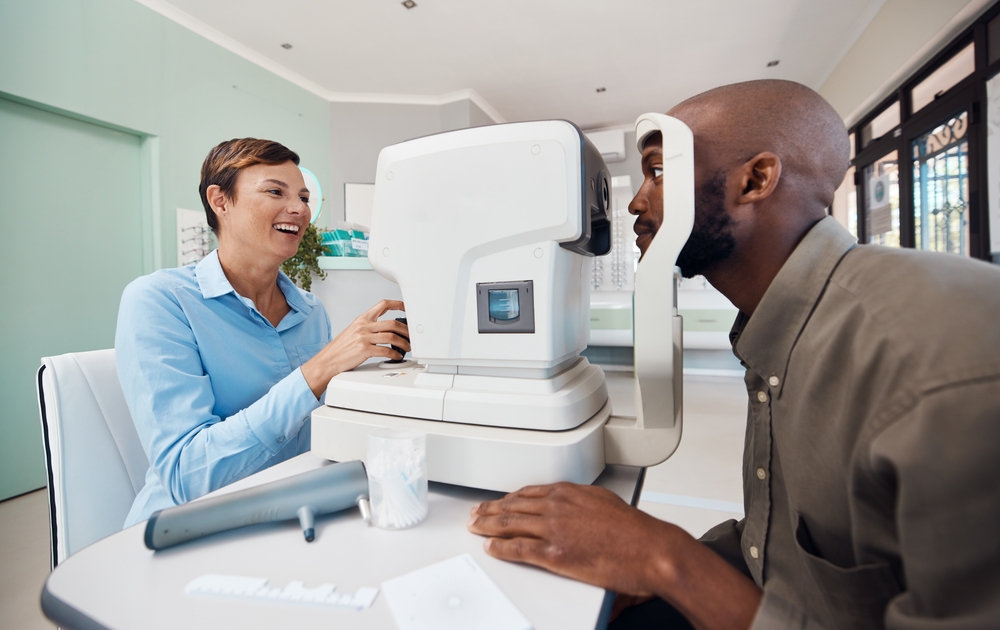
If you’ve ever walked out of an eye appointment squinting at the parking lot with blurry near vision, you’ve been through pupil dilation.
Most patients tolerate it without fully understanding why it happened or what the doctor was actually looking for. Knowing the purpose behind eye dilation makes the whole experience feel less like an inconvenience and more like the valuable health check it is.
Keep reading to learn what dilation involves, what it can detect, and when your optometrist may or may not recommend it!
What Happens When Your Eyes Are Dilated?

Dilation widens the pupil (the dark center of your eye) using medicated eye drops. Under normal conditions, your pupil automatically constricts in bright light to limit how much light enters the eye. When an optometrist applies dilating drops, those muscles temporarily relax, holding the pupil open wider than it would naturally stay. This gives your doctor a much broader view of the structures inside your eye.
Examining an undilated eye is a bit like trying to see into a dark room through a keyhole. Dilation opens the door. Full dilation typically takes 15 to 30 minutes after the drops are applied, and people with lighter eye colors (blue, green, or hazel) tend to dilate faster than those with darker brown eyes.
Once the drops take effect, your optometrist uses a bright light and a magnifying lens to carefully examine the retina, optic nerve, macula, and the blood vessels that run along the back wall of the eye.
What Conditions Can Eye Dilation Detect?
The retina and optic nerve sit at the very back of the eye, completely out of reach without a wide-open view. Many serious eye diseases develop there, often without causing noticeable symptoms until they have already progressed.
A dilated eye exam gives your optometrist direct access to these structures in a way that no other routine step in an exam can replicate.
During dilation, your doctor can look for early signs of conditions, including:
- Glaucoma, which progressively damages the optic nerve and often develops without any pain or obvious warning
- Macular degeneration affects the central area of the retina responsible for sharp, straight-ahead vision
- Diabetic retinopathy is a complication of diabetes that damages tiny blood vessels throughout the retina
- Retinal tears or detachment, which can become a medical emergency if not identified promptly
- Cataracts, where dilation helps assess the severity of lens clouding
Many patients are surprised to learn that a dilated exam can also sometimes reveal signs of systemic health issues: blood vessel changes visible through the retina sometimes point to high blood pressure, diabetes, or elevated cholesterol, even before other symptoms appear elsewhere in the body.
Is Eye Dilation Necessary Every Time?
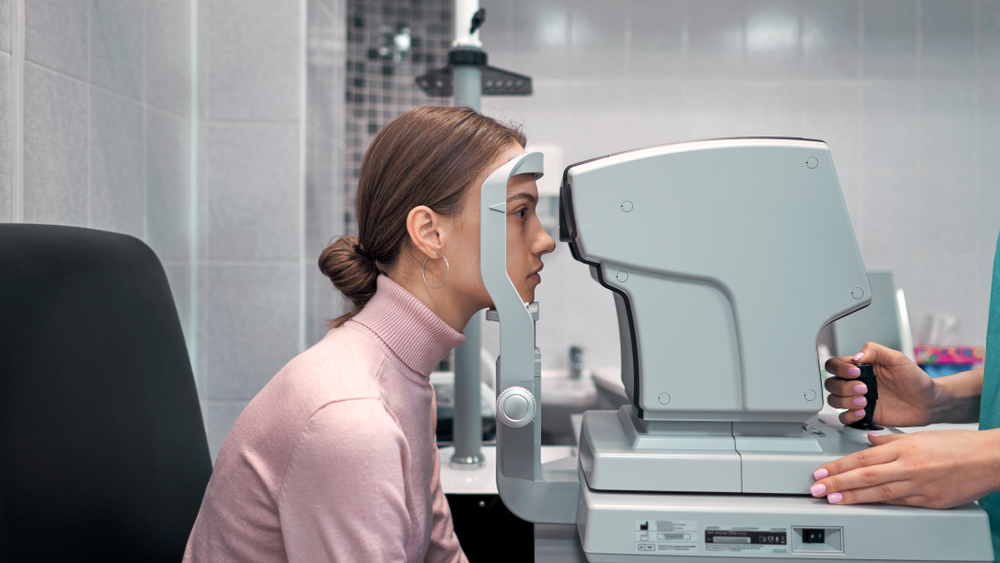
This is the question many patients ask, and the straightforward answer is: not always. Whether dilation is recommended depends on your individual health profile, risk factors, and how recently you had your last thorough exam.
Your optometrist is more likely to recommend dilation if you are over 40, have diabetes or high blood pressure, have a family history of glaucoma or macular degeneration, or are experiencing new visual symptoms such as floaters, flashing lights, or changes in your peripheral vision. Those who have not had a comprehensive eye exam in several years will also benefit from a dilated evaluation to establish a clear baseline of their retinal health.
For younger, healthy adults with no known risk factors and no changes between regular appointments, your doctor may determine dilation is not needed at that particular visit.
At Blaine Eye Clinic, each patient is evaluated individually. There is no one-size-fits-all protocol, and your doctor will walk you through the reasoning behind any recommendation made at your appointment.
How to Prepare for a Dilated Eye Exam and What to Expect Afterward

The effects of dilating drops typically last four to six hours, though some patients experience light sensitivity that extends a bit longer depending on the drops used and their individual response. Light sensitivity and difficulty focusing on near objects (like your phone screen or a book) are the most common aftereffects.
Driving can be uncomfortable during this window, so arranging a ride home is a smart move, particularly if it is your first dilated exam or you are especially sensitive to bright light.
Packing a pair of sunglasses makes a noticeable difference in comfort after the appointment. Your optometrist may offer disposable shades, but having your own pair is useful.
If you wear contact lenses, bring your glasses as well, since your doctor may advise waiting before reinserting contacts immediately after the exam.
Protecting Your Vision Starts with Regular Exams
Dilation is not a formality. When your optometrist recommends it, they are assessing areas of your eye that cannot be evaluated any other way, looking for conditions that often carry no early warning signs and can cause permanent vision loss if left undetected. Early detection makes a significant difference in treatment outcomes across nearly every eye disease that dilation helps identify.
If you have questions about eye dilation or are ready to schedule your next appointment, the team at Blaine Eye Clinic in Blaine, MN, is here to help. Schedule your comprehensive eye exam today and take a proactive step toward protecting your long-term vision!